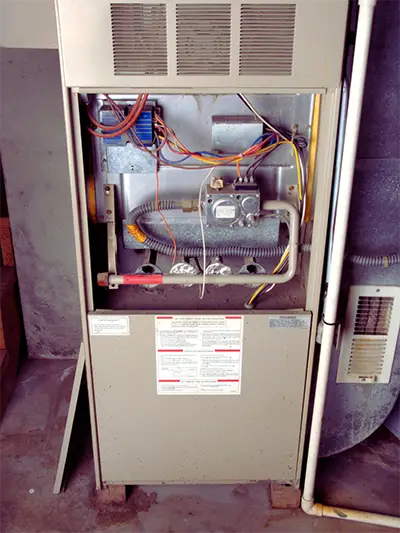
 Discovering leaking water around your furnace can make anyone feel uneasy. It’s not something you expect from a system designed to heat, not leak. But the good news is, this issue is common and often fixable with the right steps. The key is understanding why it’s happening.
So, before you grab the phone to call a technician or try to mop it up yourself, let’s take a deep dive into the possible causes of a leaky furnace. We’ll also explain what you can do and when it’s time to call a pro.
Key Takeaways
- High-efficiency furnaces naturally produce water as part of their heating process. Leaks may stem from issues with drainage systems.
- Conventional furnaces usually do not produce water. If you see a leak, it may mean there is a problem with an attached appliance, like an air conditioner or water heater.
- Addressing furnace leaks early can prevent serious issues like rust, electrical damage, and even carbon monoxide leaks.
- While some simple problems can be addressed by homeowners, many leaks require the expertise of a certified HVAC technician.
Why Does My Gas Furnace Produce Water?
Let’s start with a simple question: Why would a furnace even have water in it in the first place? The answer depends on the type of furnace you have.
If you own a high-efficiency gas furnace, water production is a normal part of its operation. The process begins with a signal from your thermostat to the furnace’s control board. That opens the gas valve, allowing combustion to start. Heat gets generated in the heat exchanger, and the blower fan sends that heat through your home.
In high-efficiency furnaces, there’s a secondary heat exchanger where water vapor is condensed into liquid as part of this process. That liquid is drained away using a condensate system.
If everything’s working properly, the water goes through the drain hose, the condensate line, and out of your furnace. But if there’s a block or a crack, that’s when you’ll see water leaking around the unit.
On the flip side, conventional furnaces (which are less energy efficient) don’t produce water during operation. So, if you have a standard-efficiency model and see water, something else might be leaking in your home.
Identifying Your Furnace Type
 Before diagnosing the problem, it’s helpful to know what kind of furnace you have. Luckily, it’s easy to tell the difference between a high-efficiency and a standard-efficiency furnace.
Here’s how:
- Exhaust Pipe Material: High-efficiency furnaces use PVC pipes to vent exhaust, while standard models have metal exhaust pipes.
- AFUE Rating: Check the Annual Fuel Utilization Efficiency (AFUE) rating. High-efficiency units usually have a rating of 90% or higher. If it’s lower, you likely have a standard furnace.
- Age of Home: If your house was built in the last 10-15 years, chances are you have a high-efficiency furnace.
Why Is My High-Efficiency Furnace Leaking Water?
If you’ve determined that you have a high-efficiency furnace, the water leak is likely related to its condensate system. There are several common culprits for why your furnace might be leaking.
Clogged Condensate Drain Hose
Over time, dust, dirt, and other debris can build up in the condensate drain hose. When this happens, water backs up and leaks around the furnace. The good news is that this is often a straightforward fix. A bit of cleaning might be all it needs.
Loose or Cracked Condensate Drain Line
Another possibility is that the condensate drain line has developed a crack or loose connection. When this happens, water leaks out rather than flowing away properly.
Clogged Condensate Trap
The condensate trap is designed to keep water from backing up. However, if it’s clogged, water will overflow, and you’ll see it pooling around the base of the furnace.
Faulty Condensate Pump
High-efficiency furnaces sometimes rely on a pump to move the condensed water away from the unit. If the pump is blocked or malfunctioning, water will back up and leak. These pumps usually last 3-5 years before needing a replacement, so if yours is older, it might be time for an upgrade.
Cracked Inducer Assembly
In some cases, the inducer assembly, which helps vent exhaust gases, can develop cracks. If this happens, water will leak out during operation.
Why Is My Conventional Furnace Leaking Water?
Now, if you have a standard-efficiency furnace and are seeing water, the issue isn’t the furnace itself. Instead, it’s likely connected to one of the appliances or systems that share space with your furnace.
Let’s look at the most common causes:
AC Drain Pan Cracks
In many homes, the air conditioner shares the same ductwork and space as the furnace. The AC’s drain pan collects condensation, and if this pan develops cracks, it can lead to water pooling around the furnace.
Clogged AC Drain Line
Similarly, the AC’s condensate drain line can become blocked. When that happens, water will overflow, giving the appearance that your furnace is leaking.
Frozen AC Evaporator Coil
If your AC’s evaporator coil freezes, it will eventually thaw, leading to water buildup. If this happens, you may notice water around the furnace even when the air conditioner isn’t running.
Hot Water Heater Leaks
Another potential source of water is the water heater. If the heater’s drain valve or tank is cracked, water will leak out and pool near the furnace.
Leaky Humidifier
Finally, if your home has a whole-house humidifier attached to the furnace, leaks in its water line can cause water to pool around the furnace.
Is a Furnace Leaking Water Problematic?
The short answer is yes. Even though a small puddle of water might seem like no big deal, furnace leaks can lead to bigger, more expensive problems if left unchecked.
Rust Damage
Water and metal don’t mix well. If water sits on furnace components for too long, it can cause rust, which reduces efficiency and leads to breakdowns.
Heat Exchanger Damage
Rust on the heat exchanger can be especially dangerous. This part helps heat your home, but if rust compromises it, it could lead to dangerous carbon monoxide leaks.
Electrical Damage
Most furnaces have electrical components like the circuit board. Water exposure can lead to malfunctions and costly repairs.
If you notice water, it’s important to address it sooner rather than later. Call a professional before the problem spirals out of control.
What To Do If My Furnace Is Leaking Water?
 Here’s a quick guide on what to do if you spot water around your furnace.
Turn Off the Furnace
First, stop the system. You can do this by adjusting the thermostat or using the furnace switch. This prevents further water from leaking and stops any potential electrical damage.
Clean Up the Water
Grab some towels or a wet vacuum and soak up as much water as you can. The goal here is to minimize any rust or electrical issues caused by standing water.
Remove the Front Panel
If you’re comfortable with DIY work, consider removing the front panel of your furnace. This allows you to clean up any water inside the unit and prevent mold growth.
Call an HVAC Professional
Once you’ve done the immediate clean-up, call an HVAC technician. While some causes of water leaks are easy to fix, others require professional expertise to diagnose and repair.
One Hour Can Help With a Leaking Furnace
 Furnace systems are complex. While it might be tempting to DIY the repair, there’s a real risk of misdiagnosing the problem. In fact, a small issue can snowball into a major headache if improperly addressed.
That’s why calling an HVAC professional is your best bet for long-term solutions. One Hour offers expert furnace maintenance, repairs, and installations in Orlando, FL, and surrounding areas. With their “We’re always on time or you don’t pay a dime” guarantee, you can rest assured that you’ll get quality service, quickly.
Final Thoughts
Water leaking from your furnace is never a good sign, but it’s not something to panic about either. By understanding what might be causing the leak and when to call in the pros, you can avoid costly repairs and potential safety hazards.
The key is early detection. With prompt action, furnace leaks can be addressed effectively and safely.
FAQs
When your furnace is leaking water, it’s normal to have questions. Below is a collection of frequently asked questions to provide clarity and guide you through the next steps.
Why is my furnace leaking water in the summer?
If your furnace is leaking during the summer, it’s likely connected to your air conditioning system. Your AC’s condensate drain may be clogged, or the evaporator coil might be frozen and thawing.
Can I fix a leaking furnace myself?
Some small issues, like clearing a clogged drain line, can be fixed by homeowners. But for more serious problems, or if you’re unsure of the cause, it’s best to call an HVAC technician.
What happens if I ignore a furnace leak?
A: Ignoring a leak can lead to rust, electrical damage, and even carbon monoxide poisoning if the heat exchanger is compromised. Address leaks quickly to avoid bigger problems.
Is water around my furnace problematic?
Yes, water can cause serious issues like rust, electrical malfunctions, and mold. It’s important to address the issue as soon as you notice water.
By staying proactive and knowing when to call for help, you can keep your furnace running smoothly and avoid unnecessary repairs.