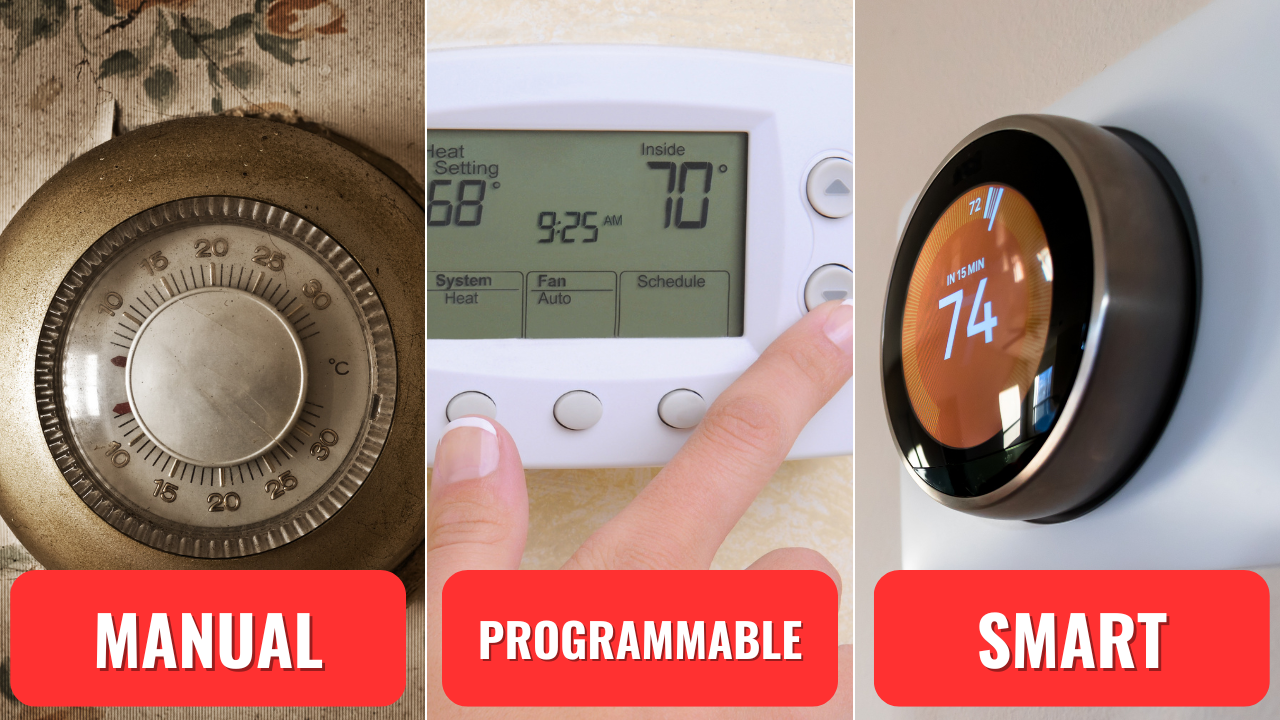
 Discovering that it’s time to replace your home’s thermostat is more exciting than you might think. New, modern thermostat styles offer something for everyone. If you’re a self-proclaimed minimalist who doesn’t mind tweaking the dial, then you might prefer the traditional manual style.
Meanwhile, people with routine lifestyles and a preference for savings without complicated gadgets might like programmable thermostats. Smart thermostats are also an option to satisfy the tech-lover in your household who loves the prospect of getting energy reports and operating the system on a variable schedule.
If there’s a downside to all of these options, it’s being frozen by indecision. But, you don’t have to worry. Our team is here to help you find the ideal thermostat for your home that will provide years of satisfaction.
Understand What All Thermostats Actually Do (And What They Don’t)
To make an informed decision on a thermostat, it’s important to throw out some misconceptions about how they work. The concept that all thermostats will save you money isn’t necessarily true.
Thermostats have different abilities when it comes to heating and cooling control. Some offer more zone control than others, and it’s critical that a thermostat is compatible with the HVAC system style your home has installed.
For instance, a forced air system circulates the air through ducts and vents. Meanwhile, a radiant system warms floors and walls to send radiant heat into a room. As you might imagine, the thermostats for these two different systems will also vary regarding which is more effective and user-friendly.
Manual Thermostats: Old School, But Still Cool?
 Let’s take a look at manual thermostats to determine if and when they might still be relevant in modern homes. A manual thermostat works by using a bimetallic strip or mercury switch to determine if the room temperature matches the current set point.
Pros
•Dirt Cheap
•Foolproof (for the most part)
Cons
•No options for automation
•Human error can lead to higher energy bills
So, who are manual thermostats best for? We find that these are ideal for cabins and other places that need simple, inexpensive thermostats. Retirees and other people who don’t leave the house tend to be fine with having manual thermostats that they can adjust as needed.
Programmable Thermostats: Find the Middle Ground
 Programmable thermostats were once the cutting edge of technology, but now they serve as more of a middle ground. The biggest thing to know about these is that they offer various scheduling formats to fit different needs.
For instance, 7-day programming allows you to set different temperatures for each day of the week. Alternatively, 5-1-1 programming lets you set one specific schedule for weekdays and different ones for Saturday and Sunday. This works well if you have a predictable workweek schedule and do different things on the weekend.
Many people also choose the 5-2 option. This is similar to the 5-1-1 schedule, but you can combine Saturday and Sunday into the same setting. You’ll prefer this one if you do the same or similar things all weekend long.
If you like the idea of this option, then you’ll want to look for features such as battery backups and user-friendly interfaces along with HVAC mode synching.
Pros
•Enjoy more reliable energy savings
•Match to predictable routines
Cons
•Steeper learning curve than many people expect
•The “set it and forget it” concept won’t always work
Smart Thermostats: Put AI In Your Hallway
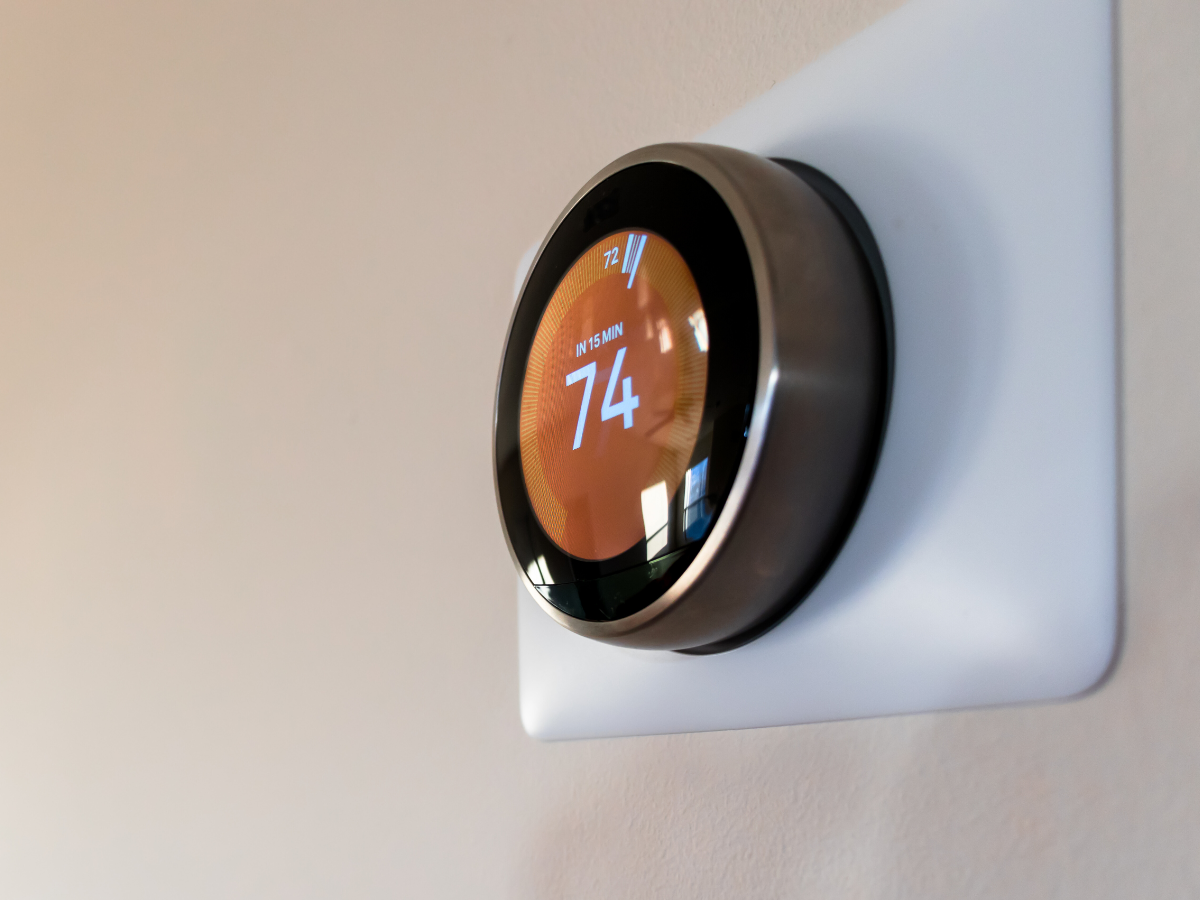 Smart thermostats provide the highest level of personalized temperature regulation that technology can offer to the modern residential homeowner. These thermostats are Wi-Fi enabled and allow for remote control using apps, along with voice integration.
Machine learning makes it possible for the thermostat to identify usage patterns and adjust its temperature regulation to match. Bonus features also include geo-fencing, humidity sensors and usage analytics.
Pros
•Optimizes itself over time
•Ability to change temps from anywhere
Cons
•Upfront cost
•Can be overkill for basic HVAC systems
Smart thermostats collect information about your household to optimize its performance. This can create privacy and data concerns that you’ll want to consider. Our technicians can help you find ways to minimize data privacy risks, so you can still enjoy this option.
Real Cost Breakdown: Upfront Vs. Long-Term
At the end of the day, we know that everyone wants to weigh the cost vs. the benefits in every HVAC-related decision. Here’s a simplified price range chart to help you understand what to expect:
•Manual: $15 to $60
•Programmable: $50 to $150
•Smart: $120 to $300
Naturally, you’ll also need to factor in the cost to DIY versus having one or our pros help. There is also the energy savings potential. You’ll also want to consider that Energy Star-certified smart thermostats can reduce your heating and cooling costs by potentially more than 8% on average.
Compatibility & Installation: Don’t Skip This Essential Section
If you’re thinking about adding a smart thermostat, then you’ll need to know if your home has a common, or C-wire. It’s also important to make sure that the thermostat you choose is compatible with your home’s HVAC system, unless you’re planning a total upgrade.
As with many DIY projects, you’ll need to research the process carefully to make sure it’s possible. With new technology, it’s often necessary to call one of our pros to ensure you get the highest satisfaction from your new thermostat.
Check Out What Most Articles Won’t Tell You (But You Need to Know)
Making smart decisions requires having all of the information available. We want to make sure you know that some smart thermostats can mess with legacy HVAC setups. Programmable models can also fail if you don’t have a regular schedule.
Some people can also benefit from using manual models to save energy, but you’ll need to be disciplined. To put it simply, not every home needs the latest and greatest tech to achieve a balance between a comfortable home and saving money.
Consider My Honest Recommendation (Based On Real-World Use)
Bottom line is that your personality, lifestyle and goals for energy savings all play a role in this decision. If you’re a tech-savvy homeowner, then a smart thermostat might make your life easier.
Landlords managing a rental may prefer a basic, foolproof manual thermostat that is easier to replace as needed. If you wish you were cutting utility bills yesterday, then a programmable thermostat can give you energy savings from the initial point of installation.
Need Thermostat Installation in Orlando, FL?
 Are you ready to select a thermostat that hits every spot on your checklist? Make sure to match your thermostat to your lifestyle and not just your budget. Contact One Hour Air Conditioning & Heating for thermostat installation and repair services.
We service Orlando, FL and the surrounding areas, and we promise that we’ll be on time or you won’t pay a dime. Our technicians are excellent at helping homeowners find a thermostat that fits their busy lifestyles.
Thermostat FAQs
If you’re still curious about thermostat selection, these answers to common questions can help you continue learning.
Can I install a smart thermostat without a C-wire?
Most smart thermostats need a C-wire, which older homes may not have. It’s best to know if your home needs one before you start a DIY project.
Do programmable thermostats really save money?
Absolutely! But, you’ll need to maintain a consistent schedule to get the most from your new thermostat.
What’s the difference between a 5-2 and a 7-day programmable thermostat?
A 7-day thermostat allows you to set a different schedule for each day of the week. A 5-2 allows you to set a schedule for a traditional work or school week, where the temperature settings are different on the weekends or your days off.
Is a smart thermostat worth it in mild climates?
Yes! While you might not see as steep energy savings as people in extreme climates, you’ll still see marked differences in your comfort, utility bills and ability to control the temperature remotely.